



Summary:
Asia’s investment in Africa is entering a new phase driven by manufacturing expansion, industrial corridors, and structured Special Economic Zones (SEZs). As rising costs and geopolitical shifts reshape traditional Asian production hubs, African industrial ecosystems are emerging as complementary manufacturing bases offering competitive labour, trade access, and improving infrastructure.
This analysis explores three critical signals behind Asia Africa economic engagement, including sector-specific investments in automotive manufacturing, textiles, agro-processing, and export-oriented production. Backed by rising foreign direct investment (FDI) flows and corridor-based industrial development, Africa is increasingly positioned as a strategic destination for long-term industrial capital.
Table of Contents:
1. Signal One: Why Asia’s Focus on Africa Is Shifting
2. Signal Two: Why Asia Is Looking Beyond Its Traditional Manufacturing Bases?
3. Signal Three: Why Africa and Why Now?
4. What Types of Investments Are Driving Asia’s Interest?
5. Why Automotive Manufacturing is the Ultimate Ecosystem Maturity Test
7. Where Is This Showing Up Already?
8. What Capital Flows Are Confirming?
9. What This Means for Investors
10. Looking to explore where this opportunity takes shape?
Over the past decade, Africa has become one of Asia’s most important external partners for trade, infrastructure, and investment. China has been Africa’s largest trading partner since 2009, with bilateral trade reaching approximately USD 280 billion in 2023. India–Africa trade has also expanded steadily, crossing USD 100 billion, placing India among Africa’s top trading partners.
These numbers indicate scale. But scale alone does not explain the current shift in interest.
What matters today is that Asia’s engagement with Africa is becoming more operational, more selective, and more long-term.

Many Asian economies are entering a phase where domestic manufacturing advantages are narrowing.
Rising labour costs, tighter regulations, land constraints, and geopolitical risks have increased the cost of concentrating production in a single geography. As a result, companies are reassessing how and where they expand capacity.
Africa is emerging in this context not as a replacement, but as a complementary manufacturing base.
Several African countries now offer:
For Asian manufacturers, this combination supports gradual capacity expansion rather than abrupt relocation.
Africa’s relevance today is closely linked to execution.
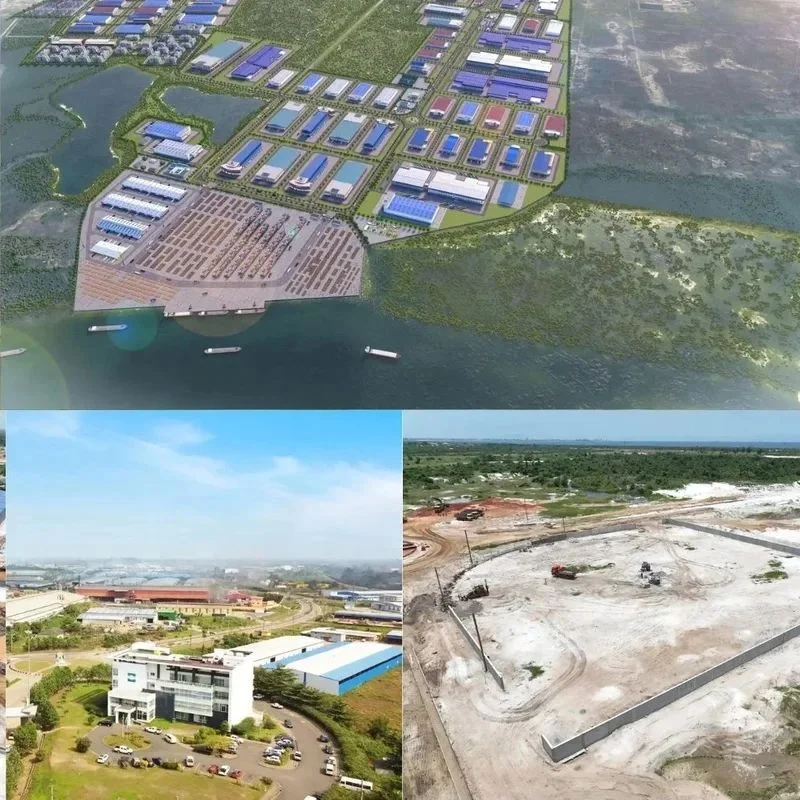
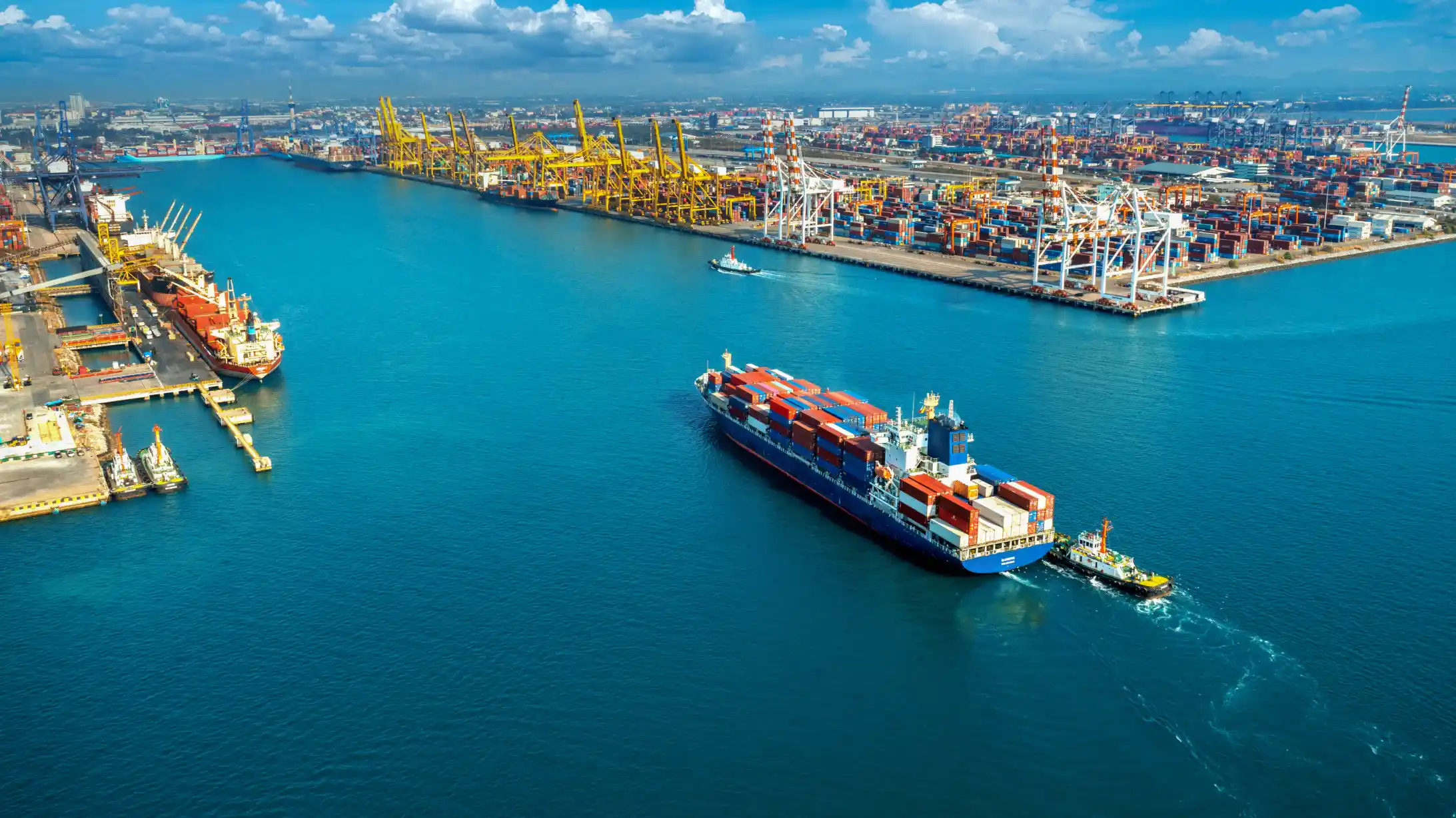
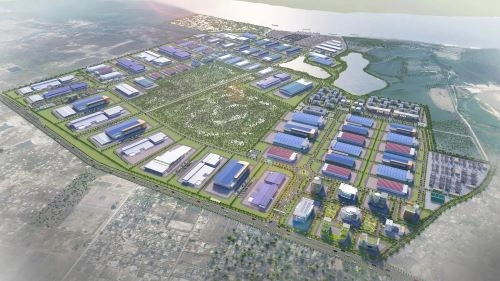
Over the past few years, multiple countries such as Benin, Togo, and Gabon, among others, have moved beyond policy intent to implement industrial frameworks that investors can evaluate. Special Economic Zones, industrial parks, and port-linked corridors have created defined entry points for manufacturing and processing activity.
At the same time, Africa’s demographic fundamentals remain compelling. The continent is expected to account for over one-third of global workforce growth by 2050, creating long-term labour availability and consumption demand.
Together, these factors have shifted Africa from an exploratory market to one where measured investment decisions are increasingly viable.
The current phase of Asia–Africa engagement is increasingly focused on production and value addition, rather than extraction. Asian firms are assessing opportunities across manufacturing segments where Africa’s cost structures, labour availability, and trade access align with export-oriented business models.
Key areas of interest include textiles and apparel, automotive and industrial components, and agro-processing & food manufacturing. In many cases, these investments are structured to serve global markets, with Africa operating as a production base supplying Europe, the Middle East and North America.
Infrastructure investment continues to underpin this shift, primarily as an enabler of trade and manufacturing supporting logistics, power reliability, and industrial clustering rather than standing alone as a development objective.

Among industrial sectors, automotive and components manufacturing serve as the most rigorous indicator of an investable environment.
Unlike light manufacturing, automotive supply chains require uninterrupted power, reliable logistics, skilled workforce, and regulatory alignment making them a strong indicator of ecosystem maturity.
In mature markets like Morocco and parts of Southern Africa, Asian manufacturers are increasingly integrated into automotive value chains supplying European assemblers.
Activity extends beyond basic assembly to include wiring harness production, metal stamping, electronic components that demand repeatability and precision at scale.
What makes these locations viable is not cost alone, but infrastructure depth. Proximity to ports, established industrial zones, and trade agreements with the European Union allow manufacturers to operate within tight delivery and compliance windows.
For investors, the presence of these supply chains suggests that production environments have moved beyond pilot-stage viability into sustained operation. This sector also generates multiplier effects. Automotive manufacturing anchors supplier networks, logistics providers, tooling services, and workforce upskilling programs that benefit the entire industrial zone.
The presence of complex supply chains is a green flag for investors. This indicates that the local ecosystem has moved beyond viability into sustained, world-class operation. When a region can support the repeatability and precision of an automotive line, it can seamlessly support a high-value manufacturing operation.
Beyond automotive, similar patterns are visible across other manufacturing segments.
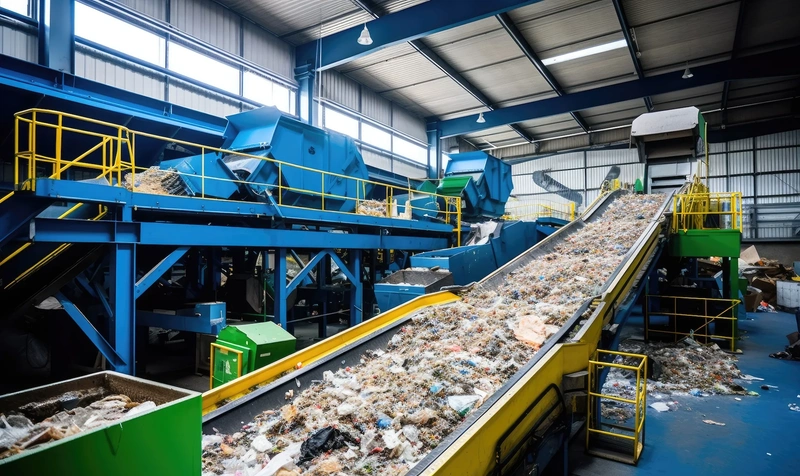
Ethiopia and Kenya have seen sustained Asian participation in export-oriented apparel and textile manufacturing supplying global brands. In East and Southern Africa, agri-processing facilities backed by Asian investors are exporting finished food products rather than raw commodities.
These operations are typically located within established industrial zones and trade corridors, supported by functioning ports, power infrastructure, and trade facilitation frameworks.
Together, they reinforce a consistent theme: Asia’s engagement is increasingly centered on scaling proven systems, not testing unproven ones.
Global foreign direct investment declined by roughly 11% in 2024, according to UNCTAD. Africa, however, bucked the broader trend, with inflows rebounding sharply to a record USD 97 billion, raising the continent’s share of global FDI to approximately 6%. Investment was concentrated primarily in manufacturing, infrastructure-linked industries, and energy.
Asian investors, especially mid-sized manufacturers and industrial groups, have been among the more consistent participants. These investors typically enter earlier in the investment cycle, focusing on operational feasibility and long-term cost structures. Historically, such participation often precedes broader institutional interest once operating models are established.
Asia’s activity in Africa offers a useful reference point for how investable environments are being identified in practice. Capital is concentrating in specific sectors and locations where operating conditions are already workable and can be expanded with limited friction, rather than across markets in a broad or uniform way.
For investors, this reinforces a simple reality: opportunity in Africa is increasingly shaped by where systems are functioning, not by macro narratives alone. Understanding this shift allows investors to assess opportunity with greater precision, focusing on sectors, corridors, and industrial ecosystems that are already moving, rather than waiting for wholesale market maturity.
Together, these patterns point to a broader shift toward zone-led and corridor-based development where manufacturing, trade access, and infrastructure are designed to scale together.
Asia’s growing engagement with Africa is creating tangible entry points across manufacturing, processing, and trade-linked sectors. For businesses and investors evaluating their next phase of expansion, Africa now offers structured industrial ecosystems designed to support long-term operations.
Connect with Africa for Investors to explore sector-specific opportunities, established industrial zones, and on-ground investment pathways and assess where your strategy aligns with Africa’s next growth cycle.
1. Why is Asia’s interest in Africa becoming more visible now, rather than earlier?
Because Africa’s industrial landscape has crossed an execution threshold. For years, interest existed at a conceptual level. What has changed is the availability of structured environments industrial zones, port-linked corridors, and trade-aligned manufacturing hubs that allow capital to move from intent to operation. Asia’s engagement is becoming more visible because the operating conditions are now clearer, not because the opportunity is new.
2. Does Asia’s growing presence suggest Africa is entering a new phase of industrialization?
It suggests a shift in how industrialization is taking shape. Rather than broad-based, country-wide manufacturing pushes, activity is concentrating in specific sectors and locations that are already trade-ready. This form of industrialization is more targeted, export-oriented, and ecosystem-led, and Asia’s participation reflects confidence in that model.
3. Is this shift limited to a few headline markets, or does it indicate a broader pattern?
While activity is most visible in a handful of well-known manufacturing hubs, the underlying pattern is broader. Similar structures are emerging across multiple regions, particularly where infrastructure, labour availability, and trade access intersect. Asia’s approach is less about betting on individual countries and more about identifying repeatable operating environments that can be scaled across markets.
4. What does this mean for investors who are not based in Asia?
Asia’s involvement is less about competition and more about validation. It demonstrates where operating models are already working and where industrial ecosystems are formed. For non-Asian investors, this provides a useful reference point not to follow capital blindly, but to understand where Africa’s manufacturing and trade infrastructure is proving resilient and investable.
5. How do manufacturing costs in Africa compare to Asia?
In well-structured industrial zones, manufacturers can achieve up to 40% lower operational costs than in traditional Asian production hubs. This advantage comes from lower labour and land costs, reduced logistics expenses, and the impact of tax incentives and trade preferences. Together, these factors make Africa increasingly competitive not just on cost, but on overall operating efficiency.
6. What are the best African industrial zones for Asian investors?
The most attractive zones are those built for execution. Strong momentum is concentrated in port-linked and trade-aligned industrial ecosystems across Benin, Togo, Gabon, Ethiopia, Kenya, and Morocco, where reliable infrastructure and clear market access allow manufacturers to scale with confidence rather than navigate fragmented operating environments.
recommended topics
Discover prime locations across Africa for lucrative investment opportunities and strategic growth.
Explore key investment zones in Africa that offer strategic advantages and economic benefits.
Uncover the best investment opportunities in Africa to maximize your business potential.

Identify the most promising sectors in Africa for high returns and sustainable investments.


Africa Business Opportunities: Location-Based 
Africa Business Sectors: Location-Based
Copyright © Arise IIP, 2026