


*Note: Name, Email and Phone Number are mandatory.







As mobility transforms worldwide from personal transport to last-mile delivery safety gear, it is no longer an afterthought.
The humble helmet has evolved into a critical component of a multi-billion-dollar ecosystem spanning manufacturing, regulation, and design innovation. With rising two-wheeler ownership across developing economies and growing policy focus on road safety, helmet production is fast emerging as an industry of the future one where Africa is poised to play a defining role.
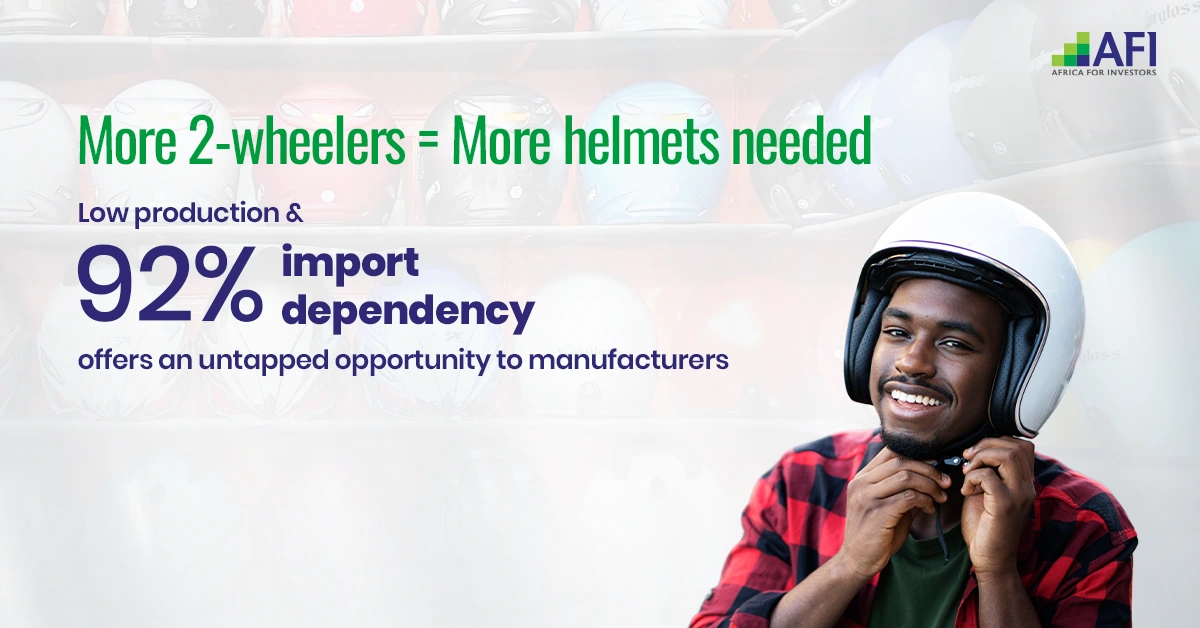
Because mobility itself is changing. Across Asia, Africa, and Latin America, two-wheelers have become the lifeline of urban transport and last-mile delivery. By 2030, emerging economies will account for over 80% of the world’s two-wheelers, led by affordability, congestion, and delivery-driven micro-mobility.
With this shift comes a parallel rise in safety consciousness and regulation pushing helmet manufacturing from a peripheral niche into a mainstream, fast-scaling industry.
According to the World Health Organization, over 50% of road fatalities in low and middle-income countries involve two or three-wheelers. Governments are responding with mandatory helmet laws, safety standards, and public awareness campaigns.
India’s policy enforcement alone lifted helmet sales by over 25% in three years. Southeast Asia followed suit; now, Africa is on that same trajectory, an inflection point where policy, population, and production opportunity converge.
Africa’s two-wheeler market is expanding faster than anywhere else. The continent imported over 2.5 million motorcycles in 2023 with Kenya, Nigeria, and Tanzania leading the charge.
These bikes aren’t just for transport; they power livelihood deliveries, ride-hailing, and logistics. As mobility scales, so does the need for certified, affordable helmets. The WHO estimates that helmet usage in Sub-Saharan Africa still sits below 35%, even in countries with safety laws.
That gap represents not just a policy challenge, but a multi-billion-dollar manufacturing and market-capture opportunity for early entrants.
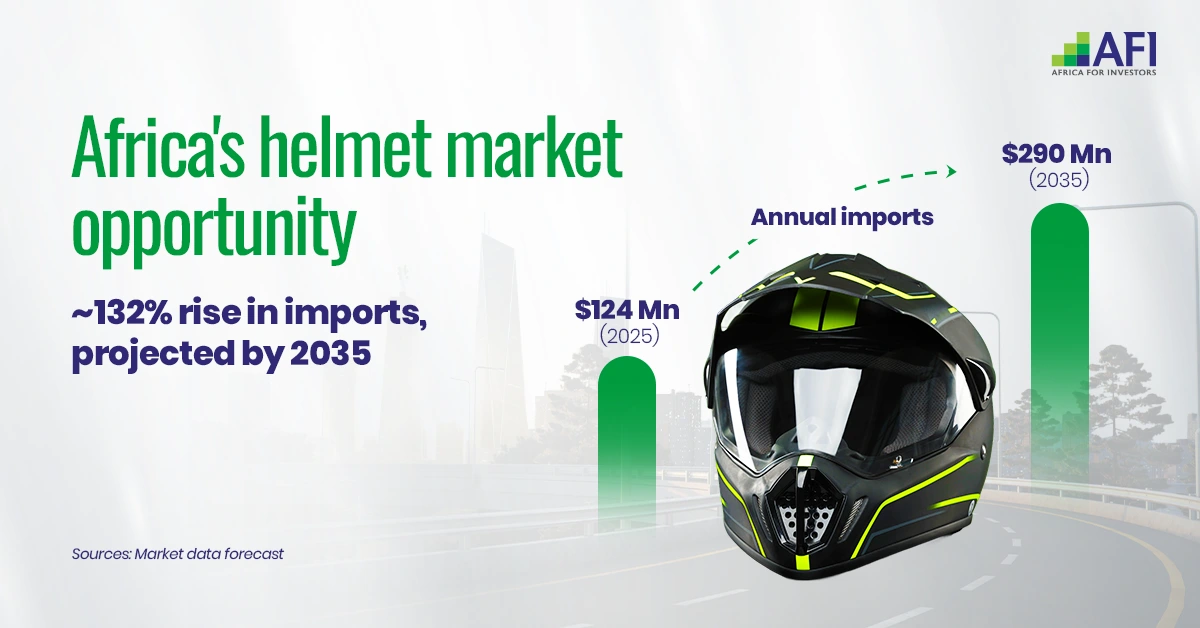
The data suggests long-term momentum. Africa’s motorcycle market is projected to grow at 7–8% CAGR through 2030, with the helmet segment mirroring that rise.
Imports of helmets into key markets like Ghana, Kenya, and Rwanda have grown threefold over the last five years. But with most of those helmets shipped from Asia, Africa’s lower input costs, reduced logistics exposure, and continental trade access create a stronger business case for local value creation and investor-led capacity building.
Freight volatility, currency shifts and lead-time uncertainty are making global brands re-evaluate sourcing. For helmets, a product where unit economics depends on material efficiency, energy reliability, and logistics, Africa offers a leaner model. Access to petrochemical derivatives (for ABS and polycarbonate shells), growing steel and textile clusters, and a youthful, trainable workforce creates an end-to-end ecosystem for competitive production.
We have seen the same pattern before in apparel, footwear and auto components.
Helmet Manufacturing is the next natural progression.
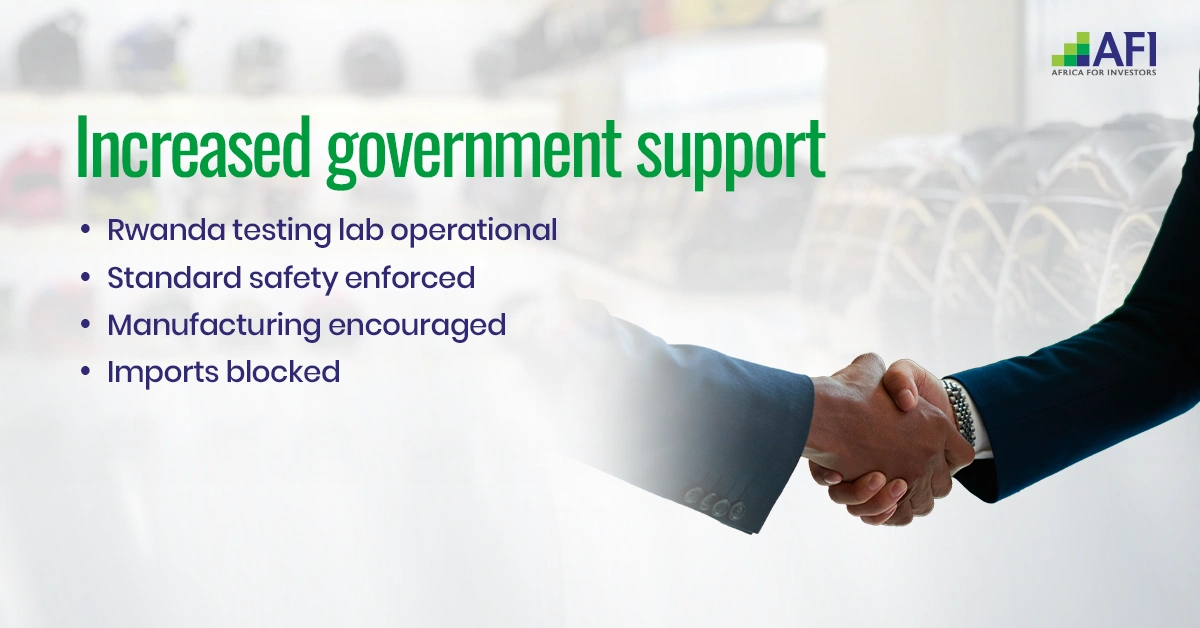
Rwanda offers a compelling example. The government’s Made-in-Rwanda push includes targeted incentives for helmet manufacturing, backed by strict enforcement of safety compliance. In 2024, Rwanda set up its first domestic assembly unit with capacity for half a million helmets annually, an early signal of demand stability. Kenya and Ghana are following similar paths, pairing enforcement with import substitution goals.
This alignment between regulation and production is what makes Africa’s story different today. It’s not just demand-driven; it’s institutionally supported. For investors, this alignment between enforcement and local capacity signals a stable policy environment which is key, for long-term manufacturing returns.
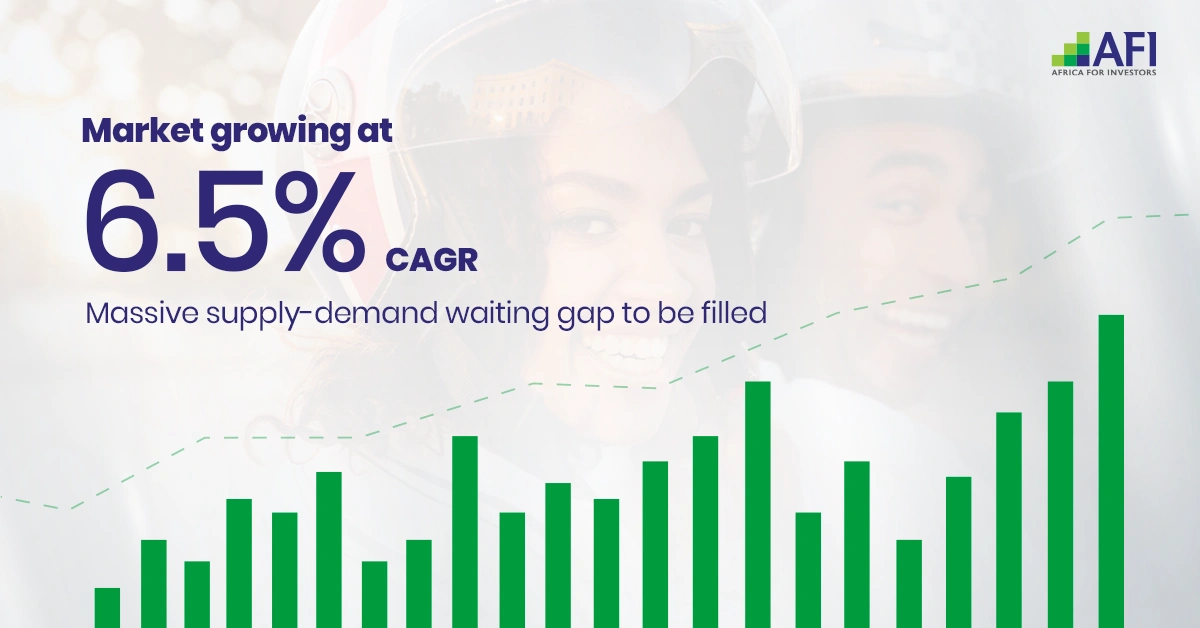
Estimates place Africa’s helmet demand at over 20 million units annually by 2030, compared to less than 8 million today.
Nigeria alone could account for 5 million units, while East Africa’s mobility corridor Kenya, Uganda, Tanzania, Rwanda forms the continent’s fastest-growing cluster. Rising e-mobility adoption, with electric bikes entering the market, will only accelerate this curve.
Yes, and increasingly so. Local production cuts freight costs by up to 30%, while proximity to end-markets shortens lead times, reduces working capital pressure, and enables faster design adaptation to local regulations.
For manufacturers, this translates into better cost control, stronger price competitiveness, and improved EBITDA margins, especially when scaling regionally under AfCFTA , the world’s largest single market of its kind.
Far from being a local-only play, Africa is becoming a powerful export hub.
Thanks to trade frameworks like AfCFTA and AGOA, the continent offers competitive access to markets across Europe, the Middle East, and the Americas.
For early entrants, there’s a clear first-mover advantage: you can lock in supplier networks, influence certification and quality pathways, and secure regional distribution long before demand peaks.
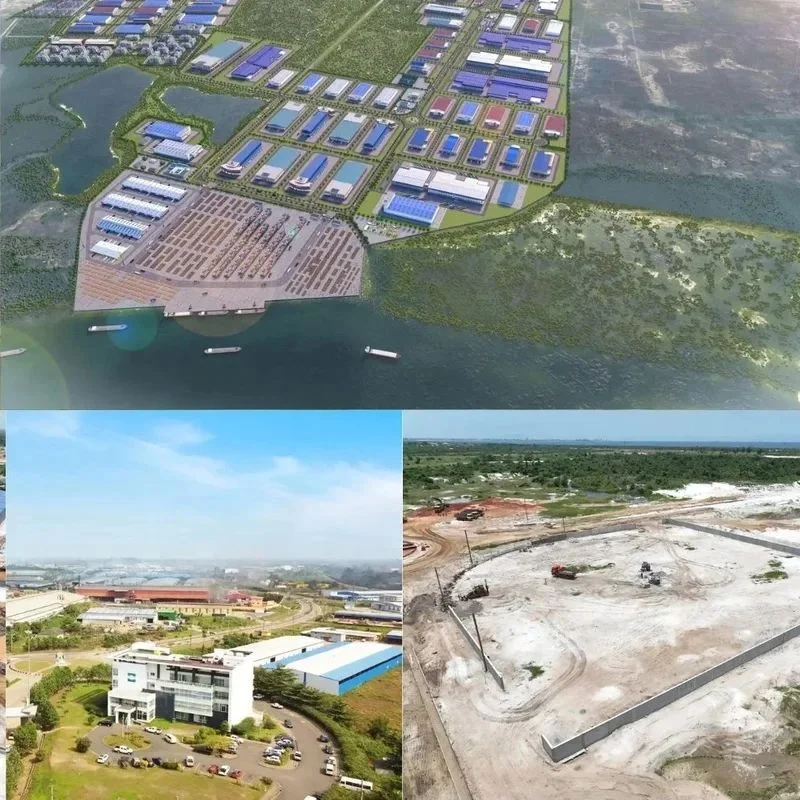
Africa for Investors is helping global OEMs and manufacturers do exactly that by supporting contract production and joint ventures inside Arise IIP’s industrial ecosystems. The Special Economic Zones are already set up for export readiness, enabling cost-efficient, compliant manufacturing at scale that can serve both regional and global markets.
As demand for helmets accelerates across Africa, manufacturers need clarity on where the real opportunities lie and the right partners to help them move from interest to execution. That’s where Africa for Investors comes in.
AFI connects global manufacturers with bankable, high-potential industrial opportunities across the continent, including locations well-suited for helmet production. Powered by Arise Integrated Industrial Platforms (Arise IIP), AFI provides streamlined access to integrated industrial ecosystems in Togo, Benin, Côte d’Ivoire, and Gabon ecosystems designed with reliable infrastructure, port connectivity, utilities, and co-located suppliers across plastics, metalworks, textiles, and packaging.
For safety-gear manufacturers, this reduces setup friction, improves cost efficiency, and accelerates production time.
AFI supports investors end to end through:
For manufacturers exploring Africa’s fast-scaling safety and mobility economy, AFI acts as the bridge between opportunity and execution helping you align your product, capacity, and market strategy with the continent’s most competitive industrial environments.
By integrating it from the start. Our industrial parks are ESG-certified, equipped with renewable energy infrastructure and designed to minimize waste and emissions. We work with partners to upskill local communities, ensuring employment growth matches safety and quality standards.
For us, industrialization is not just about factories; it's about building systems that elevate both people and performance.
Helmet manufacturing in Africa sits at the intersection of demand certainty, regulatory momentum, and cost-efficient production environments. For manufacturers, the sector offers room to scale, diversify sourcing, and serve fast-growing two-wheeler markets with shorter lead times.
As mobility evolves, regions that combine policy alignment, workforce availability and integrated industrial ecosystems will define the next decade of safety manufacturing.
Africa is emerging as one of those regions not by competing with established hubs, butby offering an alternative manufacturing base that balances cost, access to markets, and long-term growth potential.
For investors evaluating new production locations, Africa presents early-mover room, the ability to build for regional demand, and pathways to serve broader export networks.
As urban mobility evolves worldwide, the logic of distributed manufacturing is replacing the old model of centralized supply.
Safety equipment from helmets to protective gear is part of a much larger movement toward resilient, regionally balanced production networks. Africa, positioned at the crossroads of trade routes to Europe, the Middle East, and the Americas, is not merely catching up; it’s redefining how and where essential products are made.
For investors, the question is no longer if Africa will rise in the safety manufacturing value chain but how soon they’ll take part in it.
Because every mobility revolution creates its own ecosystem.
For two-wheelers, that ecosystem starts with safety and helmets lead the charge. With expanding markets, regulatory will, and integrated manufacturing support, the next decade will belong to regions that combine demand with production intelligence.
And through the industrial ecosystems we operate within, we enable manufacturers to turn demand into production and opportunity into scale. For investors seeking to participate in the next frontier of Helmet Manufacturing, now is the time to explore the possibilities and we’re ready to help you connect vision with execution.
Establish your textile or apparel operations in Africa’s world-class industrial zones and position your business at the forefront of the continent’s manufacturing growth. Connect with our investment specialists to explore integrated textile parks and shape your next chapter in manufacturing excellence.
Get in touch with our Africa investment specialists or support team and expand your business in Africa today!
recommended topics
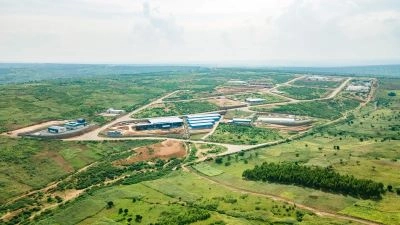
Discover prime locations across Africa for lucrative investment opportunities and strategic growth.
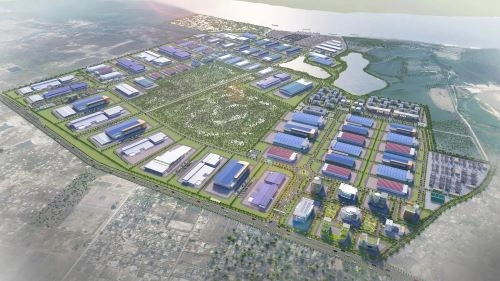
Explore key investment zones in Africa that offer strategic advantages and economic benefits.
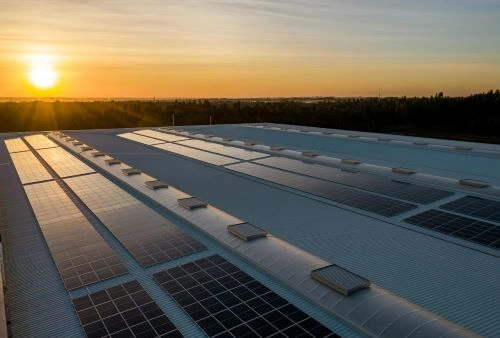
Uncover the best investment opportunities in Africa to maximize your business potential.

Identify the most promising sectors in Africa for high returns and sustainable investments.


Africa Business Opportunities: Location-Based
Africa Business Sectors: Location-Based
Copyright © Arise IIP, 2026


Compare
 Remove all
Dear investor, please compare similar category items- either Locations or Opportunities.


*Already subscribed.
*Enter your name/email.

Sign up for exclusive investment alerts.
Already subscribed? Skip
Thank You For Subscribing to
Africa For Investors.

You will be redirected to AFI’s Linkedin Profile in 10 seconds.
Stay On AFI Website










 +91 7065100700