How Africa’s SEZs Are Strengthening Manufacturing Investment Appeal





Summary:
Africa’s Special Economic Zones (SEZs) and integrated industrial ecosystems are transforming the continent’s manufacturing investment landscape. By combining strategic port access, trade connectivity, industrial infrastructure, and business-friendly environments, these ecosystems are enabling manufacturers to establish efficient, export-oriented operations while strengthening Africa’s competitiveness in global supply chains.
Table of Contents:
1. The Infrastructure Behind Africa’s Manufacturing Growth
2. Industrial Ecosystems Driving Africa’s Manufacturing Expansion
3. The Next Phase of Africa’s Manufacturing Competitiveness: Accelerated by Arise IIP
4. Frequently Asked Questions (FAQs)
For decades, Africa’s investment story has largely been defined by its resources, growing consumer markets, and long-term economic potential.
Today, a different factor is increasingly influencing manufacturing investment decisions: ecosystem readiness.
As global manufacturers diversify supply chains and evaluate new production destinations, the focus is shifting from opportunity alone to operational readiness.
Investors are asking; How efficiently can raw materials move through the supply chain? How quickly can production facilities become operational? How easily can finished goods reach regional and global markets?
Across Africa, industrial ecosystems and Special Economic Zones (SEZs) are emerging as an answer to these questions.
Built around strategic ports, logistics infrastructure, industrial facilities, and value-added manufacturing capabilities, these ecosystems are helping strengthen Africa’s position as a destination for industrial investment and export-oriented manufacturing.
Industrial competitiveness is increasingly being shaped by the ability to connect production with markets.
Across Africa, governments and industrial developers are investing in infrastructure that supports the efficient movement of goods, raw materials, and finished products.
Strategic Location: Connecting Production to Markets
For manufacturers, location is often one of the most important investment considerations.
The ability to efficiently source raw materials, access suppliers, and connect finished products to export markets can significantly influence operational competitiveness.
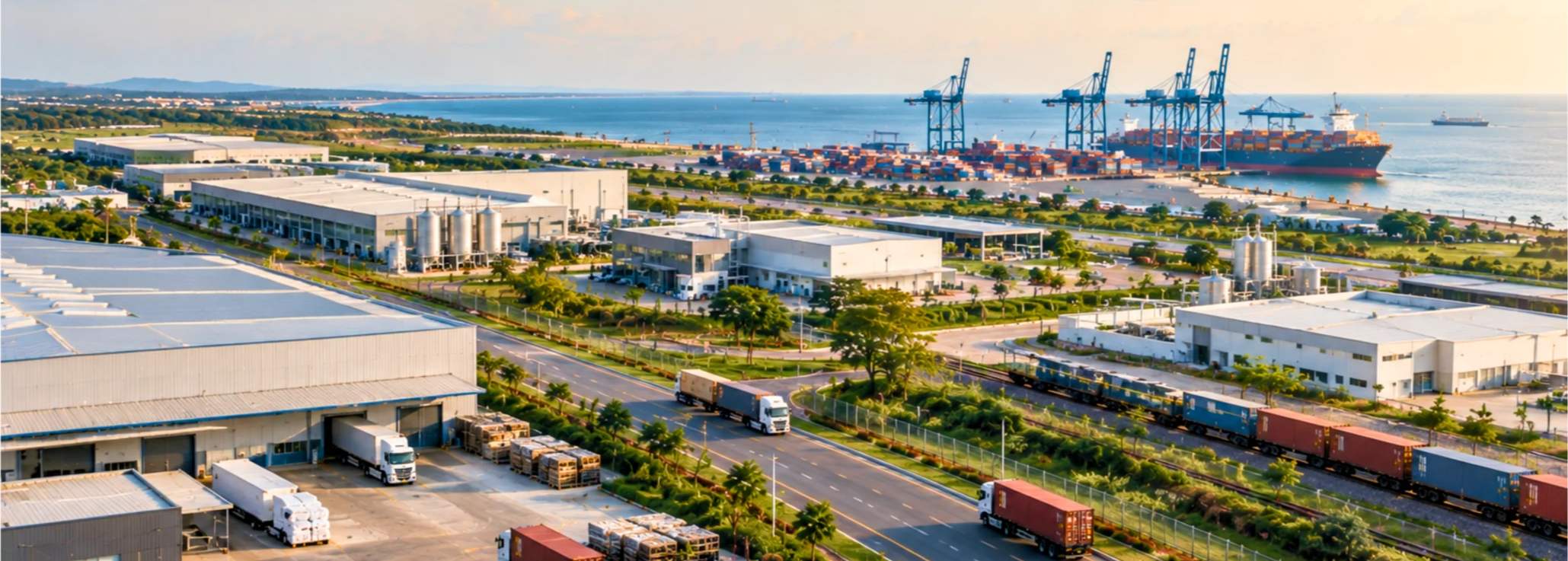
As a result, many of Africa’s emerging industrial ecosystems, including Special Economic Zones (SEZs), are being developed around strategic logistics gateways that connect production with trade.
Key examples includes:
More than maritime gateways, these ports serve as important links between industrial production and regional as well as international markets.
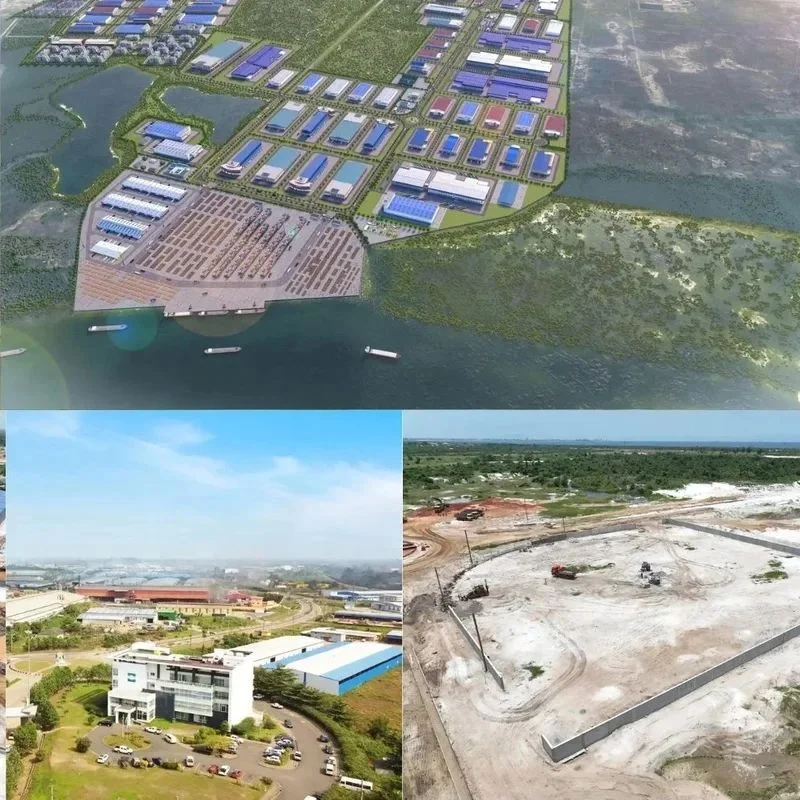
Industrial ecosystems such as the GSEZ Industrial Platform in Gabon, the Plateforme Industrielle d’Adétikopé (PIA) in Togo, and the GDIZ in Benin have been developed within or adjacent to these port zones, allowing manufacturers to move goods more efficiently between production facilities, logistics infrastructure, and export channels.
Access to efficient trade gateways is often a key consideration in industrial location decisions.
Trade Corridors: Extending Reach Beyond Borders
Port access alone does not determine industrial competitiveness.
Manufacturers also depend on the transport networks that connect factories to suppliers, distributors, neighboring markets, and export gateways.
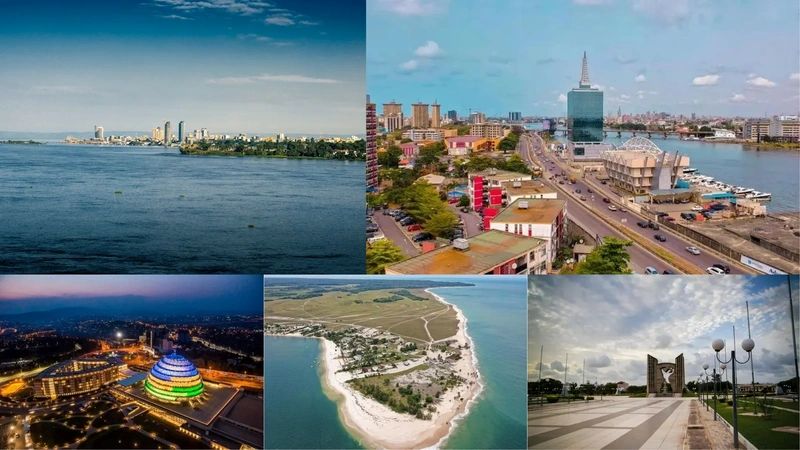
Across Africa, major trade routes such as the Abidjan-Lagos Corridor, the Northern Corridor, the Central Corridor, and sections of the Trans-African Highway Network are helping strengthen regional connectivity and facilitate the movement of goods across borders.
Another example is of Vipingo Special Econmic Zone (VSEZ) in Kenya; the zone connects to the Standard Gauge Railway (SGR) network, efficiently linking the coastal corridor to Nairobi, Naivasha, and the broader East African Community (EAC). The zone is also located close to the Port of Mombasa for easy trade.
For investors, these networks expand the effective reach of industrial ecosystems beyond their immediate location. They create opportunities to serve multiple markets, strengthen regional supply chains, and improve access to both domestic and cross-border demand.
As regional trade integration continues to deepen, connectivity to these corridors is becoming an increasingly important consideration in manufacturing location decisions.
Operational Infrastructure: Enabling Manufacturing at Scale
Industrial competitiveness ultimately depends on more than location and connectivity.
Once a facility becomes operational, manufacturers require infrastructure that supports efficient day-to-day operations and long-term growth.
This is why many modern industrial ecosystems are increasingly incorporating warehousing facilities, container yards, truck parks, utility infrastructure, internal road networks, logistics hubs, customs facilitation services, and business support facilities within a single ecosystem.
By bringing these elements together, industrial ecosystems can help reduce operational friction, improve supply chain efficiency, and create a more predictable environment for manufacturing.
For investors, the advantage lies not only in access to infrastructure, but in the ability to operate, scale, and export within a connected ecosystem designed to support industrial growth.
Several industrial ecosystems across Africa demonstrate how connectivity, infrastructure, and industrial development can come together to support large-scale manufacturing investment.
Positioned within reach of the Port of Cotonou, GDIZ has been developed around local transformation and value addition across sectors including cotton processing, textiles, apparel manufacturing, cashew processing, and agro-industrial value chains. The ecosystem demonstrates how logistics connectivity and industrial infrastructure can support export-oriented manufacturing closer to source.
Located near the Port of Lomé, PIA combines industrial infrastructure, logistics connectivity, and integrated business support services within a single ecosystem. Its positioning highlights how proximity to major trade gateways can support manufacturers seeking access to both regional and international markets.
Industrial transformation through value-added manufacturing, particularly in timber processing and downstream industries. The ecosystem illustrates how industrial infrastructure and export connectivity can work together to strengthen manufacturing competitiveness.
Vipingo Special Economic Zone (VSEZ), Kenya
Strategically located near the Port of Mombasa and connected to Kenya’s Standard Gauge Railway (SGR) network, VSEZ provides manufacturers with efficient access to domestic, regional, and international markets. Its location supports industrial activities seeking strong logistics connectivity across the East African Community (EAC).
Industrial Platform Remo Free Zone (IPRFZ), Nigeria
Positioned to support Nigeria’s industrialization ambitions, IPRFZ combines industrial infrastructure, logistics access, and business facilitation services within a structured manufacturing ecosystem. The platform is designed to strengthen local production capabilities while supporting regional trade and export opportunities.
Plateforme Industrielle du Congo (PIC), Republic of the Congo
PIC is being developed as an integrated industrial ecosystem focused on enabling industrial growth, value addition, and export-oriented manufacturing. By combining industrial infrastructure with logistics connectivity, the platform aims to support diversified industrial development within Central Africa.
Kwala Industrial Park (KIP), Tanzania
Located within Tanzania’s growing industrial corridor, KIP is positioned to support manufacturing and logistics-driven industries through access to infrastructure, transport networks, and regional trade routes. The ecosystem highlights Tanzania’s growing role in East Africa’s industrial and manufacturing landscape.
ARISE Integrated Industrial Platforms (ARISE IIP) is a leading pan-African developer and operator of integrated industrial ecosystems. The company specializes in the design, financing, development and operation of world-class industrial zones that drive local manufacturing, value addition, industrial transformation and export competitiveness across Africa.
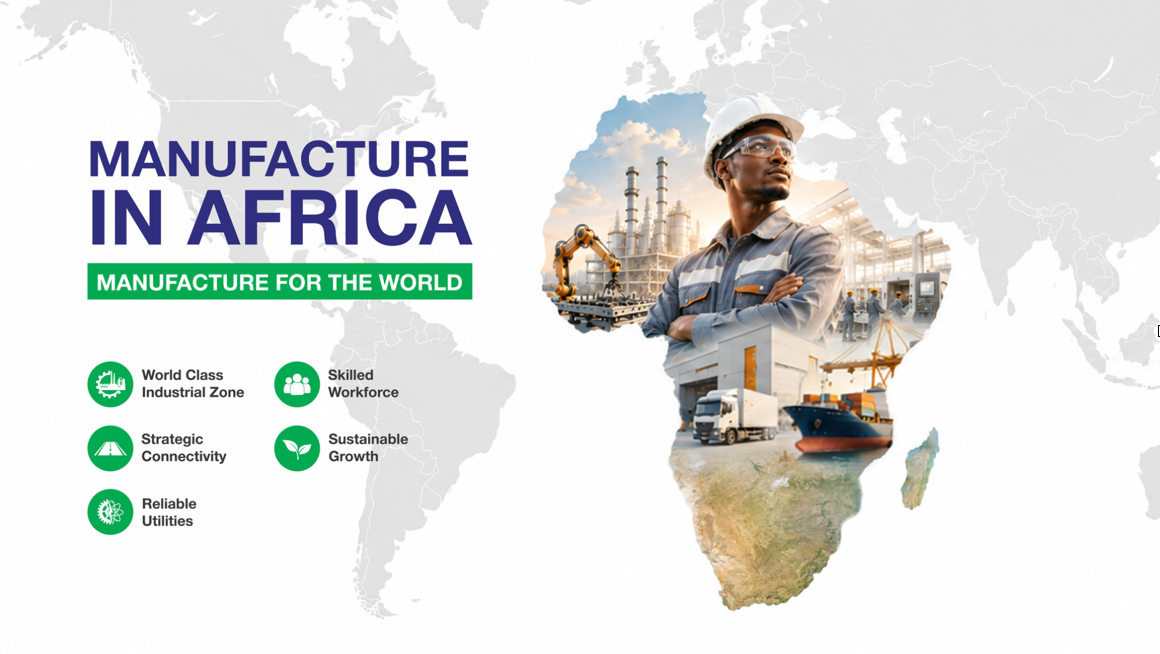
ARISE IIP currently operates 24 industrial zones across 15 African countries. Its portfolio includes 7 operational industrial parks in Gabon, Togo, Benin, Chad and Rwanda, along with 17 additional industrial parks under construction in Côte d’Ivoire, Nigeria, Tanzania, Kenya, Cameroon, Sierra Leone, the Democratic Republic of the Congo, the Republic of the Congo, Malawi and Ghana.
The ARISE IIP model integrates industrial infrastructure, logistics networks, utilities and customized business solutions within a single ecosystem, enabling manufacturers and investors to establish and scale operations efficiently. Through this approach, ARISE IIP supports sustainable industrial development, economic diversification and long-term growth across the African continent.
ARISE IIP is backed by leading global investors, including Fund for Export Development in Africa (FEDA), African Export-Import Bank (Afreximbank), Africa Finance Corporation (AFC), Equitane and Vision Invest.
For more information, visit ARISE IIP
1. What are Special Economic Zones (SEZs) in Africa?
Special Economic Zones (SEZs) are designated industrial areas that offer infrastructure, business support services, and investment-friendly policies to attract manufacturing and industrial investment. Across Africa, SEZs are helping businesses establish efficient, export-oriented operations while supporting industrialization and job creation.
2. Why are Africa’s SEZs attracting manufacturing investment?
Africa’s SEZs attract manufacturing investment by providing access to strategic ports, trade corridors, industrial infrastructure, logistics networks, and integrated business services. These advantages help manufacturers reduce operational costs, improve supply chain efficiency, and access regional and international markets.
3. How do industrial ecosystems support manufacturing growth in Africa?
Industrial ecosystems bring together production facilities, logistics infrastructure, utilities, warehousing, customs services, and business support within a single location. This integrated approach enables manufacturers to operate more efficiently, scale production, and strengthen export competitiveness.
4. Which are some leading industrial ecosystems and SEZs in Africa?
Notable industrial ecosystems in Africa include the GDIZ in Benin, PIA in Togo, Nkok SEZ in Gabon, Vipingo Special Economic Zone (VSEZ) in Kenya, Industrial Platform of Rwanda Free Zone (IPRFZ), Plateforme Industrielle du Congo (PIC), Industrial Platform of Chad (IPC), and Kwala Industrial Park (KIP) in Tanzania.
5. What role does logistics infrastructure play in Africa’s manufacturing competitiveness?
Logistics infrastructure is critical to manufacturing competitiveness because it enables the efficient movement of raw materials and finished goods. Access to ports, rail networks, highways, and trade corridors helps manufacturers connect with suppliers, customers, and export markets while improving supply chain reliability.
6. How is ARISE IIP contributing to Africa’s industrial development?
ARISE Integrated Industrial Platforms (ARISE IIP) develops and operates integrated industrial ecosystems across Africa. By combining industrial infrastructure, logistics connectivity, utilities, and business support services, ARISE IIP helps manufacturers establish, scale, and export efficiently while supporting sustainable industrial growth and economic diversification.
recommended topics
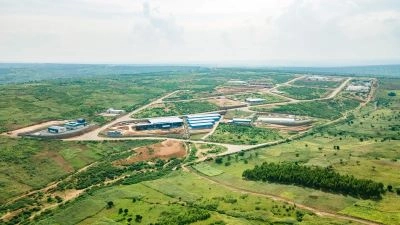
Discover prime locations across Africa for lucrative investment opportunities and strategic growth.
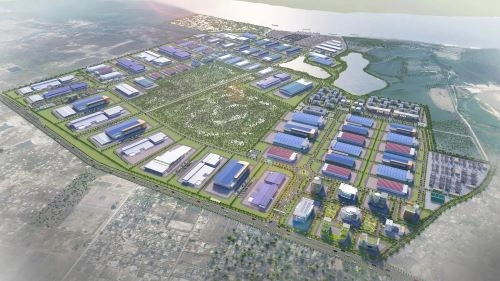
Explore key investment zones in Africa that offer strategic advantages and economic benefits.
Uncover the best investment opportunities in Africa to maximize your business potential.
Identify the most promising sectors in Africa for high returns and sustainable investments.


Africa Business Opportunities: Location-Based 
Africa Business Sectors: Location-Based
Copyright © Arise IIP, 2026